Coalition based Game-Theoretic Routing Technique for Delay Tolerant Networks with Cost and Congestion Optimization
DOI:
https://doi.org/10.5281/zenodo.19513313Keywords:
Delay Tolerant Networks, Congestion Control, Game Theory, Network Performance, Wireless CommunicationAbstract
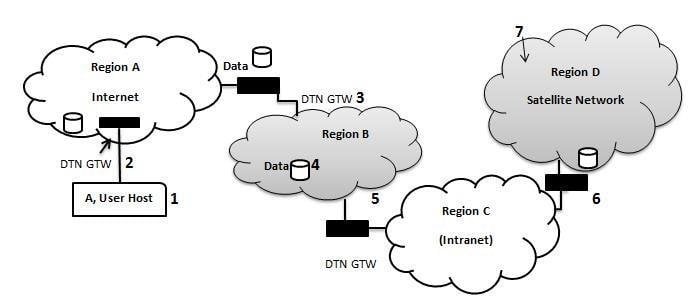
Delay Tolerant Networks (DTNs) routing is a difficult but very important task, mostly because of the intermittent connection with the network as well as the necessity to effectively schedule the data packets and choose the best transmission path. These problems are also aggravated by the frequent network cut-offs. This paper is aimed at solving these problems by suggesting a new communication approach which is coalition building between network nodes. In this work, utility functions are developed that reflect three important elements of the performance of DTN capacity, cost, and congestion. Cost-based utility model uses a variety of parameters such as the connectivity status, availability of the gateway, distance of transmission and overloading of the node. To further improve the efficiency of routing, we propose a stochastic game-theoretic model which allows making adaptive and intelligent decisions when forwarding packets. Also, a congestion control scheme is formulated, with a special utility function in a game-theoretic model. Experiments show that the suggested method is a lot more efficient than the current routing protocols. In particular, the approach attains an average overhead of 52, as compared with 77 in the case of Plague, 66.5 in the case of PROPHET and 60.75 in the case of Schedule-PROPHET, which shows that the network efficiency has been significantly improved.
References
[1] S. El Alaoui and B. Ramamurthy, “EAODR: A novel routing algorithm based on the modified temporal graph network model for DTN-based interplanetary networks,” Computer Networks, vol. 129, pp. 129–141, 2017, doi: 10.1016/j.comnet.2017.09.017.
[2] B. Kang, F. Malute, O. Bagdasar, and H. Choo, “DETN: Delay-efficient tolerant network for Internet of Planet,” IEEE Sensors Journal, vol. 20, no. 7, pp. 3696–3705, 2020, doi: 10.1109/JSEN.2019.2958612.
[3] V. Singh and G. L. Saini, “DTN-enabled routing protocols and their potential influence on vehicular ad hoc networks,” in Soft Computing: Theories and Applications. Singapore: Springer, 2018, pp. 367–375, doi: 10.1007/978-981-10-5699-4_36.
[4] P. Du and M. Gerla, “An evolutionary multi-player game model for two-hop routing in delay tolerant networks,” in Proc. IEEE 14th Int. Conf. Mobile Ad Hoc Sensor Syst. (MASS), 2017, pp. 108–116, doi: 10.1109/MASS.2017.22.
[5] F. Semsarieh and N. Derakhshanfard, “Relay node selection based on adaptive neuro-fuzzy inference system in delay tolerant networks,” International Journal of Networked and Distributed Computing, vol. 14, no. 1, p. 5, 2026, doi: 10.2991/ijndc.k.251230.001.
[6] Y. Mao, C. Zhou, Y. Ling, and J. Lloret, “An optimized probabilistic delay tolerant network (DTN) routing protocol based on scheduling mechanism for Internet of Things (IoT),” Sensors, vol. 19, no. 2, p. 243, 2019, doi: 10.3390/s19020243.
[7] S. Rahimi and M. A. J. Jamali, “A hybrid geographic-DTN routing protocol based on fuzzy logic in vehicular ad hoc networks,” Peer-to-Peer Networking and Applications, vol. 12, no. 1, pp. 88–101, 2019, doi: 10.1007/s12083-018-0642-4.
[8] H. Wang, H. Wang, G. Feng, and H. Lv, “NWBBMP: A novel weight-based buffer management policy for DTN routing protocols,” Peer-to-Peer Networking and Applications, vol. 11, no. 5, pp. 917–923, 2018, doi: 10.1007/s12083-017-0600-x.
[9] T. Wang, Y. Zhou, X. Wang, and Y. Cao, “A social-based DTN routing in cooperative vehicular sensor networks,” International Journal of Cooperative Information Systems, vol. 27, no. 1, p. 1741003, 2018, doi: 10.1142/S021884301741003X.
[10] H. Wang, L. Song, G. Zhang, and H. Chen, “Timetable-aware opportunistic DTN routing for vehicular communications in battlefield environments,” Future Generation Computer Systems, vol. 83, pp. 95–103, 2018, doi: 10.1016/j.future.2018.01.017.
[11] E. A. Abdellaoui Alaoui, H. Zekkori, and S. Agoujil, “Hybrid delay tolerant network routing protocol for heterogeneous networks,” Journal of Network and Computer Applications, vol. 148, p. 102456, 2019, doi: 10.1016/j.jnca.2019.102456.
[12] H. Guo, X. Wang, H. Cheng, and M. Huang, “A location aided controlled spraying routing algorithm for delay tolerant networks,” Ad Hoc Networks, vol. 66, pp. 16–25, 2017, doi: 10.1016/j.adhoc.2017.06.003.
[13] C. Wu, T. Yoshinaga, D. Bayar, and Y. Ji, “Learning for adaptive anycast in vehicular delay tolerant networks,” Journal of Ambient Intelligence and Humanized Computing, vol. 10, no. 4, pp. 1379–1388, 2019, doi: 10.1007/s12652-018-0725-1.
Downloads
Published
Versions
- 05-05-2026 (3)
- 05-05-2026 (2)
- 26-03-2026 (1)
Data Availability Statement
Data availability is not applicable to this paper as no new data were created or analyzed in this study.
Issue
Section
License
Copyright (c) 2026 International Journal of Computational Intelligence in Engineering (IJCIE)

This work is licensed under a Creative Commons Attribution-ShareAlike 4.0 International License.