Multi-Paradigm Architectural Taxonomy of Hybrid Quantum-Classical Learning Pipelines: From Sequential Offloading to Cloud-Native MLOps Orchestration
DOI:
https://doi.org/10.5281/zenodo.19950102Keywords:
Quantum-Classical Computing, Quantum Machine Learning, Variational Quantum Circuits, Cloud-Native MLOps, Computing Architectures, Cloud Quantum ComputingAbstract
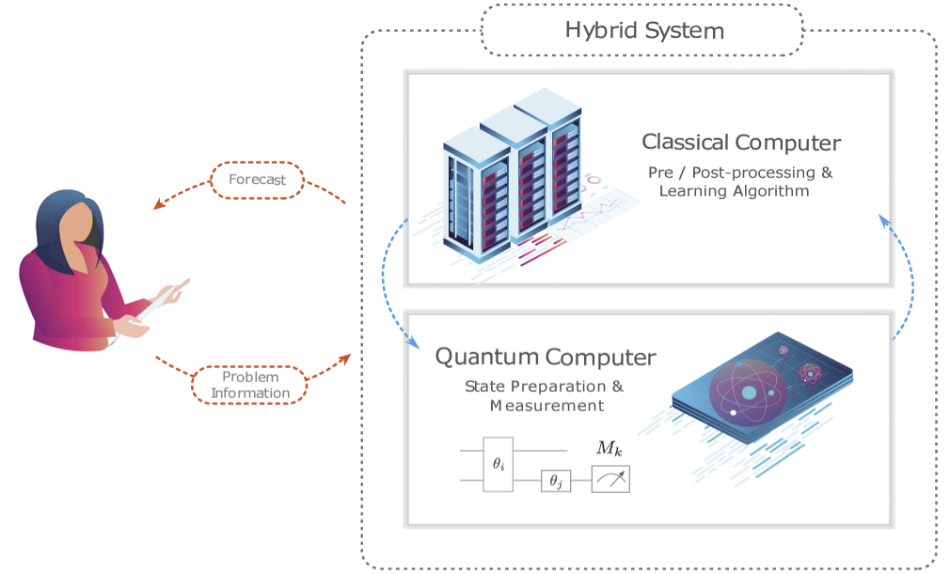
The combination of quantum computing and machine learning has led to the development of a new breed of hybrid quantum-classical learning pipelines that use the best features of both classical and quantum processors. Although quantum hardware is still limited by noise, small number of qubits, and short coherence times, hybrid architectures represent a realistic way towards quantum advantage in the near-term by delegating the more difficult computational parts to Quantum Processing Units (QPUs) while keeping the classical infrastructure for data preparation, optimization, and orchestration. This work surveys thoroughly design patterns and resource optimization strategies for hybrid quantum-classical learning pipelines running on clouds. Initially, a characterization of design patterns including sequential offloading, incremental replacement, parallel ensemble, and cloud-native MLOps is derived, and their appropriateness to different application domains as well as quantum resource constraints are discussed. Next, we explore resource allocation techniques ranging from static circuit partitioning to dynamic qubit-sharing, highlighting hardware-aware placement, fidelity-aware selection, and Kubernetes-based container orchestration. Then we talk about scheduling and optimization frameworks, classical schedulers converted to quantum workloads, AI-driven orchestration with deep reinforcement learning and graph neural networks, variational loop optimizations, and quantum-assisted classical scheduling. Besides the platforms, we review also open source tools and simulators. Implementation landscapes across major cloud platforms (IBM Quantum, AWS Braket) and open-source orchestrators (Qiboml Qubernetes CONQURE, HALO) are surveyed, alongside simulation environments.
References
[1] P. Wang, C. R. Myers, L. C. L. Hollenberg, and U. Parampalli, "Let the quantum creep in: Designing quantum neural network models by gradually swapping out classical components," Quantum Mach. Intell., vol. 7, no. 1, p. 62, 2025.
[2] J. Qi, X. Wang, Y. Li, L. Zhang, S. Kumar, and M. Chen, "Quantum LEGO learning: A modular design principle for hybrid artificial intelligence," arXiv preprint arXiv:2601.21780, 2026.
[3] B. Lu, Z. Chen, and Y. Wu, "QSRA: A QPU scheduling and resource allocation approach for cloud-based quantum computing," arXiv preprint arXiv:2411.05283, 2024.
[4] W. Luo, S. K. Singh, A. Paler, J. M. Martinis, R. Biswas, and K. Bertels, "Adaptive job scheduling in quantum clouds using reinforcement learning," in Proc. 54th Int. Conf. Parallel Process. (ICPP), 2025, pp. 1–10.
[5] T. Li and Z. Zhao, "Moirai: Optimizing quantum serverless function orchestration via device allocation and circuit deployment," in Proc. IEEE Int. Conf. Web Services (ICWS), 2024, pp. 707–717.
[6] S. Al-Sarawi, N. Al-Saadi, M. Al-Hussein, and A. Ibrahim, "A quantum-assisted framework for energy-efficient cloud task scheduling using the quantum approximate optimization algorithm and variational quantum eigensolver," Preprint, 2025.
[7] S. K. Singh, R. Kumar, and P. Singh, "QRGEC: Quantum reinforcement learning with golden jackal optimization for resilient edge cloud coordination in internet computing," Sci. Rep., vol. 16, no. 1, pp. 1–15, 2026.
[8] V. Jha, S. Srivastava, A. Sharma, and R. Gupta, "Choreography and profiling of quantum-classical FaaS workflows on hybrid clouds," in Proc. 25th IEEE/ACM Int. Symp. Cluster, Cloud Internet Comput. (CCGrid), 2025.
[9] S. Giordano, K. Sen, and M. A. Martin-Delgado, "Leveraging cloud-native infrastructure for dynamic and flexible quantum-classical MLOps," Quantum Mach. Intell., vol. 8, no. 1, p. 8, 2026.
[10] M. Robbiati et al., "Qiboml: Towards the orchestration of quantum-classical machine learning," arXiv preprint arXiv:2510.11773, 2025.
[11] H. T. Nguyen, M. Usman, and R. Buyya, "DRLQ: A deep reinforcement learning-based task placement for quantum cloud computing," in Proc. 17th IEEE Int. Conf. Cloud Comput. (CLOUD), 2024, pp. 475–481.
[12] I. Singh, S. S. Gill, J. Sun, and J. Mol, "QAISim: A toolkit for modeling and simulation of AI in quantum cloud computing environments," Clust. Comput., vol. 29, no. 2, p. 99, 2026.
[13] H. T. Nguyen, M. Usman, and R. Buyya, "QFOR: A fidelity-aware orchestrator for quantum computing environments using deep reinforcement learning," arXiv preprint arXiv:2508.04974, 2025.
[14] P. J. Karalekas, N. A. Tezak, E. C. Peterson, C. A. Ryan, M. P. da Silva, and R. S. Smith, "A quantum-classical cloud platform optimized for variational hybrid algorithms," Quantum Sci. Technol., vol. 5, no. 2, p. 024003, 2020.
[15] F. Giust, V. Sciacca, and D. Scano, "Modeling and performance evaluation of hybrid classical–quantum serverless computing platforms," IEEE Trans. Quantum Eng., vol. 6, pp. 1–13, 2025.
[16] V. Stirbu, O. Kinanen, M. Haghparast, and T. Mikkonen, "Qubernetes: Towards a unified cloud-native execution platform for hybrid classic-quantum computing," Inf. Softw. Technol., vol. 175, p. 107501, 2024.
[17] E. Giortamis, A. Lenharth, K. S. McKinley, and S. T. King, "Orchestrating quantum cloud environments with Qonductor," arXiv preprint arXiv:2408.04312, 2024.
[18] E. Giusto et al., "Dependable classical-quantum computing systems engineering," Front. Comput. Sci., vol. 7, p. 1520903, 2025.
[19] R. Indhumathi et al., "Hybrid quantum–cloud framework for nonlinear clustering optimization and intelligent resource management," Results Nonlinear Anal., vol. 8, no. 3, pp. 26–35, 2025.
[20] A. Sharma and Z. Ali, "Integration of quantum computing with artificial intelligence: A systematic review," J. Eng. Res. Rep., vol. 27, no. 9, pp. 329–343, 2025.
Downloads
Published
Versions
- 05-05-2026 (2)
- 20-04-2026 (1)
Data Availability Statement
Data can be provided on genuine request
Issue
Section
License
Copyright (c) 2026 International Journal of Computational Intelligence in Engineering (IJCIE)

This work is licensed under a Creative Commons Attribution-ShareAlike 4.0 International License.